


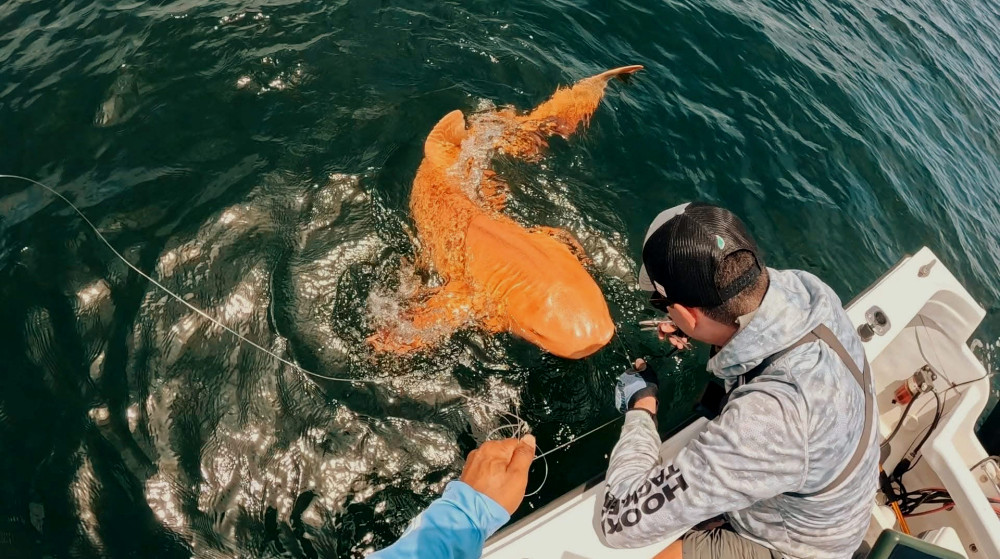
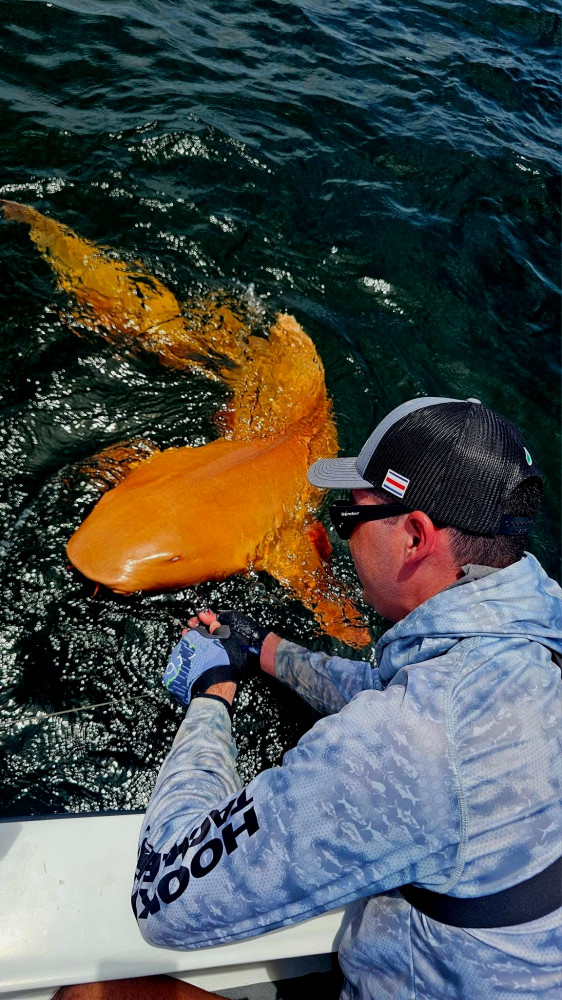
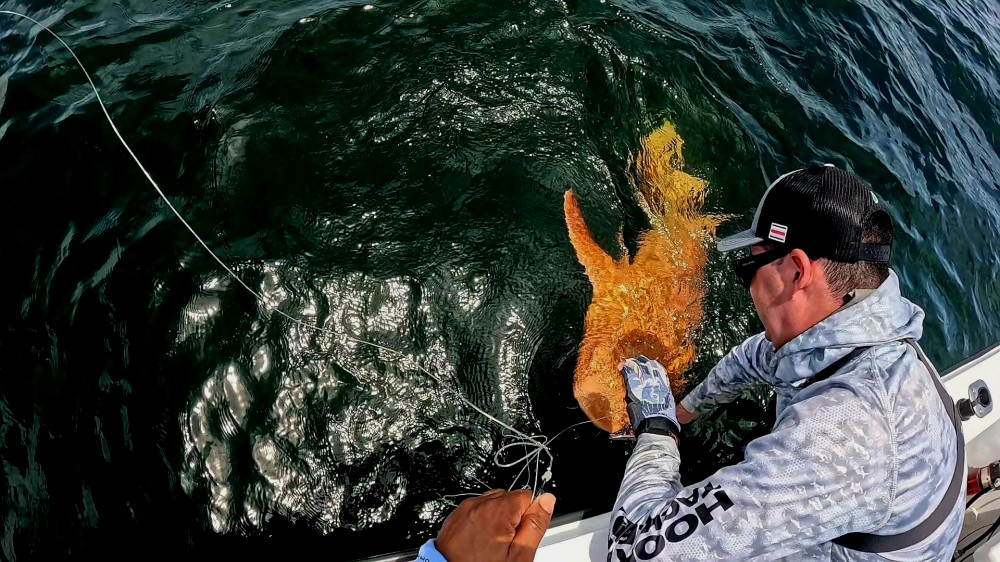
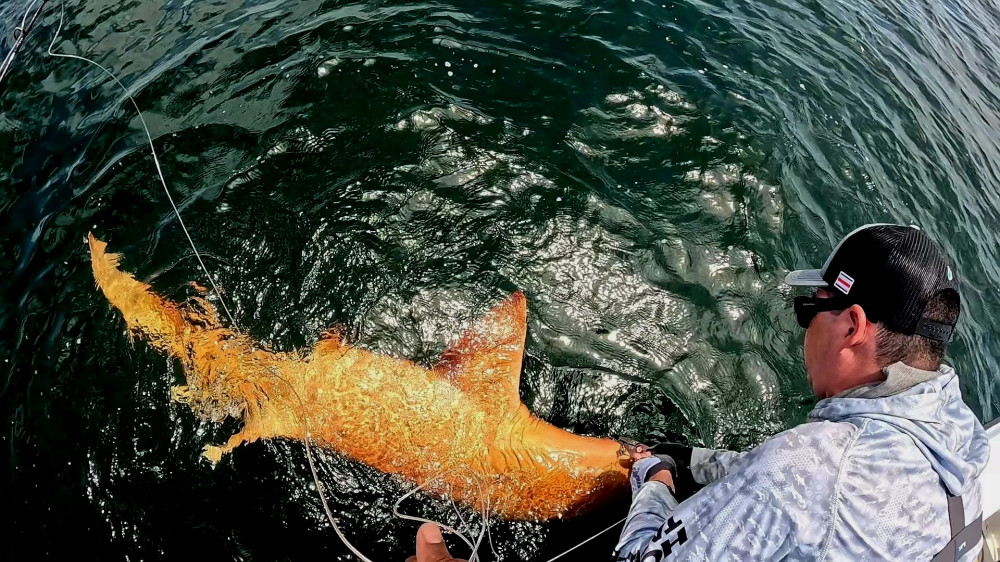
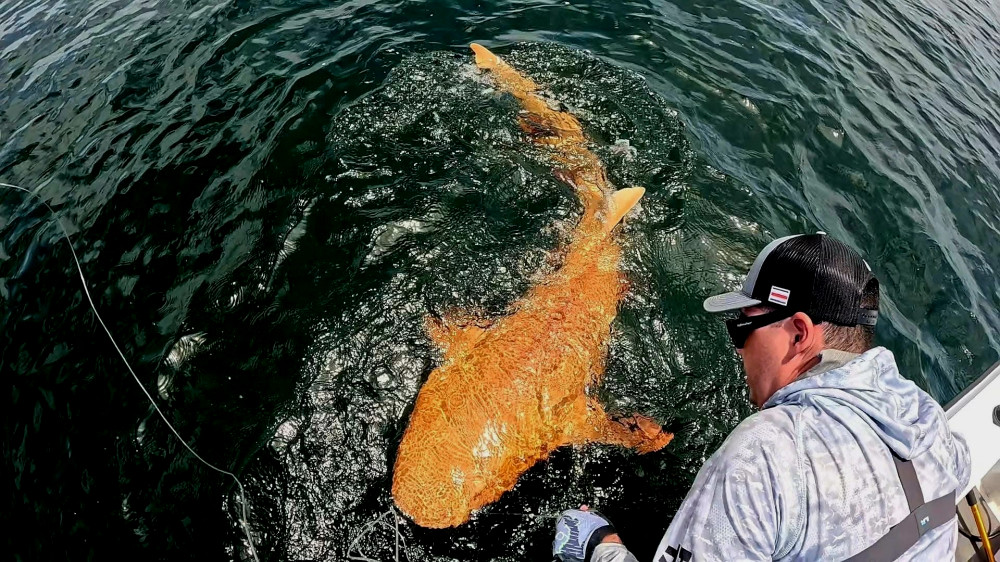
A strikingly orange nurse shark (Ginglymostoma cirratum) has been discovered in the Caribbean Sea off the coast of Costa Rica.
This rare specimen was caught during sport fishing near Tortuguero National Park, as reported by IFL Science.
The shark was located at a depth of 37 meters, measuring about two meters long, and had yellow-orange skin. After documentation, the animal was released back, with scientists detailing the finding in the journal Marine Biodiversity.
Researchers indicate that this pigmentation is a sign of xanthochromism – a rare genetic condition that leads to an excess of yellow-orange hues in the skin of animals.
This phenomenon is similar to melanism (where the coloration is entirely black) or albinism, yet occurs much less frequently. This case of xanthochromism is the first documented instance among fish in the Caribbean region, particularly among nurse sharks.
In the wild, this genetic trait can reduce survival chances as bright colors make animals more visible to predators.
Nevertheless, the risky coloration did not prevent this shark from reaching adulthood. Its size indicates successful adaptation to its environment.
Besides its unusual color, the shark also exhibited white eyes without visible irises, which may indicate a rare case of albino-xanthochromism.
Scientists believe that additional factors such as inbreeding, environmental stress, elevated temperatures, or hormonal imbalances could influence pigmentation. Further studies on genetic variability in nurse sharks and conditions in the northern Caribbean will help clarify this phenomenon.
Why is it called a Nurse Shark?
The nurse shark, or Ginglymostoma cirratum, is a species discovered in 1788, with the origin of its name still unclear.
One theory suggests that when this shark feeds on prey from the sand, it produces a sound reminiscent of a baby nursing.
Another theory posits that the word "nurse" could derive from "nusse" – an old term for catsharks, to which Ginglymostoma cirratum was previously classified.
A third theory claims that the term "nurse" comes from the Old English word "hurse," meaning "deep-sea shark," according to National Geographic.
While the true origin of the species name remains a mystery, it is well known that nurse sharks inhabit the coastal waters of the Atlantic and Pacific Oceans, near Central and South America, as well as in the Caribbean Sea, Gulf of Mexico, and along the western coasts of Africa and Europe.
These animals reside in coral reefs in tropical and subtropical seas at depths ranging from 1 to 130 meters. Young individuals hide in crevices and near rocks, while adults occupy caves and reefs. This species does not migrate and has a strong territorial attachment.
They typically display yellow-brown or gray coloration. Adult sharks can reach lengths of 1 to 3 meters and weights of 70-115 kg. They possess five pairs of gill slits and characteristic oral barbels. Their diet consists of small fish, mollusks, and crustaceans.