



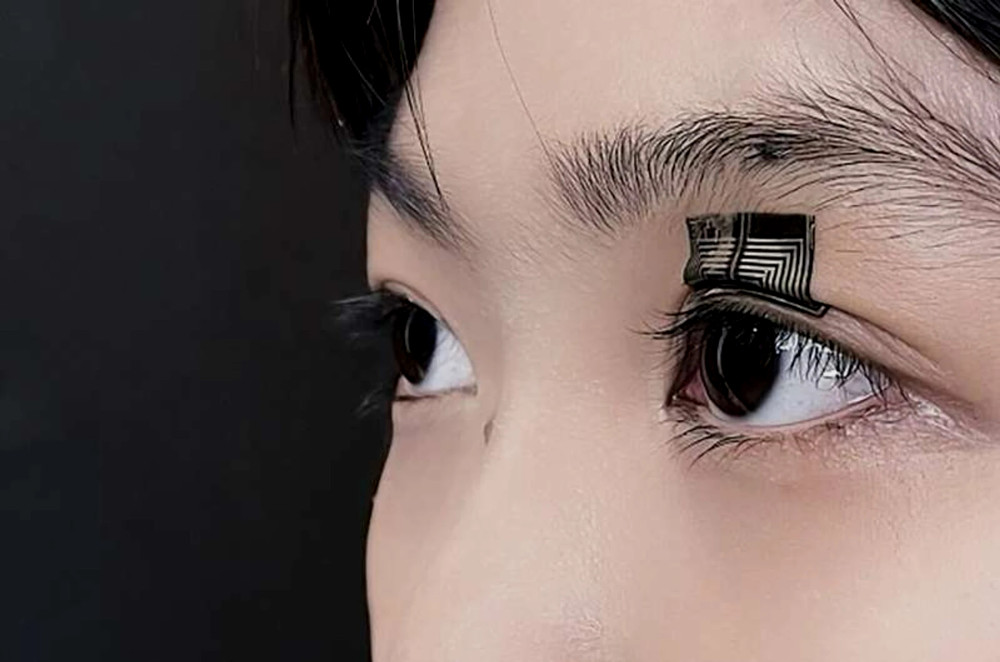
A team from the University of California, Los Angeles has developed an innovative autonomous sensor that attaches to the eyelid and tracks eye movements to assess fatigue levels. This is reported by NotebookCheck, referencing Tech Xplore.
The device, detailed in the journal Nature, combines a new type of sensor with an artificial intelligence algorithm to analyze data in real-time.
Testing has shown that the measurement accuracy is 96.4%. The foundation of this technology is based on the discovery made by the same team in 2021 of a magnetoelastic effect in soft materials, which allows a polymer composite to convert mechanical pressure from eyelid movement into an electrical signal.
The sensor's design includes a layer of silicone rubber embedded with micromagnets and a thin conductive gold coil applied to a thermoplastic elastomer. The device is stretchable, waterproof, and designed for direct wear on the eyelid. It translates eye movements into high-precision signals processed by a neural network.
The algorithm analyzes six blinking parameters to determine the user's fatigue level. The developers note that the discovery of the magnetoelastic effect in soft systems has significant scientific potential that still needs to be fully explored.