



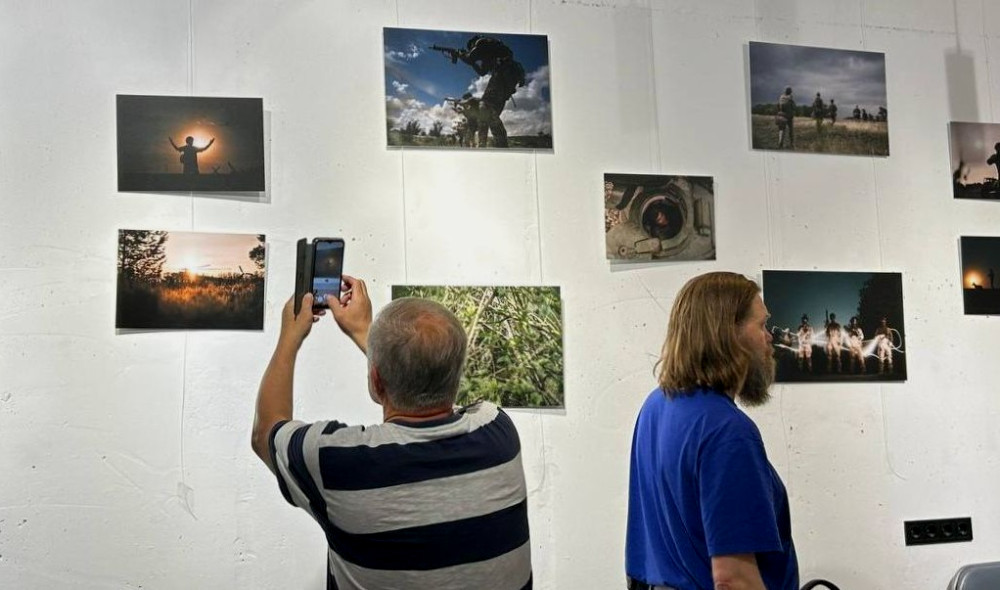


The exhibition brings together various stages of the photographer's life and artistic journey.
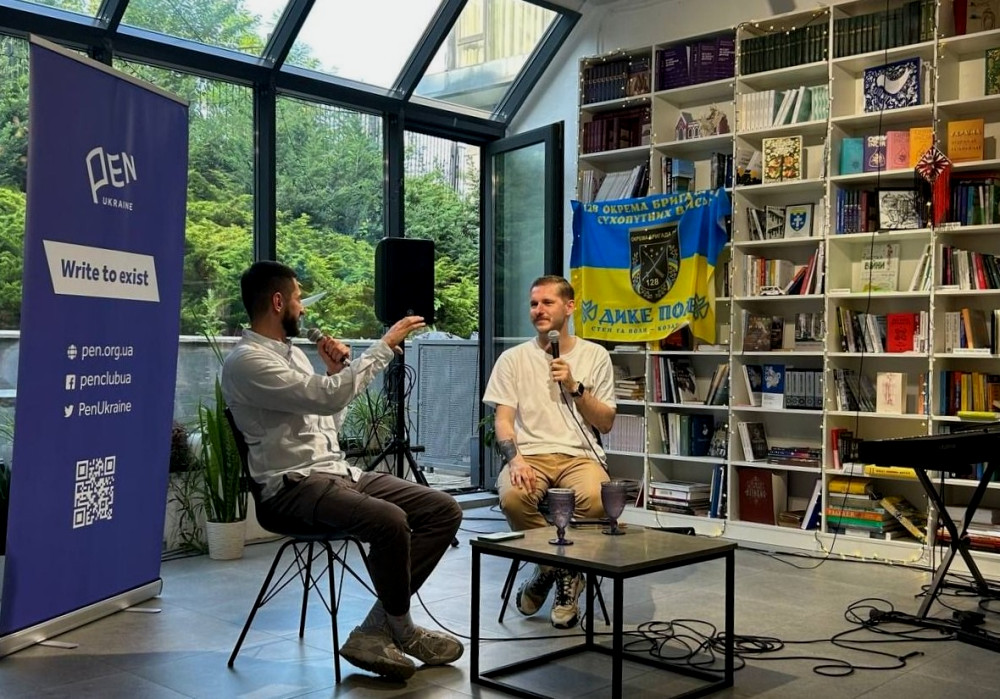
In the capital space "Pen," a photo exhibition by artist and veteran Dmitry "Orest" Kozatsky was launched under the provocative title "I Hate to Photograph."
During an open dialogue with visitors, Dmitry shared his story, discussing the challenging path he took in photography and the emotions that formed the basis of the exhibition's concept. The title became not just a marketing strategy but a deeply personal statement.
"The exhibition's title reflects certain pains. Many believe that I deeply love photography, but in reality, it's not that simple," Dmitry confesses.
According to him, after returning from captivity, he faced a difficult period when photography lost its joy, and his creative resources were nearly depleted. This phase coincided with his work at the Ministry of Defense, where creativity took a backseat to routine.
"Photography was often more about obligation than inspiration. Everyone assumed that if you are a photographer, you must capture something significant, but at the Ministry of Defense, all that was available for shooting were round tables," he humorously notes.
Now, however, he feels that a "thaw" is beginning, and he is gradually returning to his beloved craft. Dmitry also revealed that his passion for photography started in his youth, when he sought to utilize all available resources.
Later, during his service in "Azov," he discovered video, which he believed conveyed more information than photography.
"I bought a Sony Q6300, which was great for both video and photography. I felt that video could provide a deeper understanding of the situation," he explains.
This camera captured iconic images from Azovstal, which went viral worldwide in 2022. These shots became symbols of struggle and bravery, but for the author, they turned into a burden. Still, he continues to share these images as they serve as a reminder of those held captive.
During the conversation, Dmitry touched on the topic of positive discrimination, which he believes sometimes strips away individuality.
"You are invited to photo exhibitions not because you are a great photographer, but because you are a former captive, and that can feel like objectification at times. I stated right after the exchange that I don’t want to be a victim, as that would mean a victory for the Russians. I want to be a strong person who has endured all of this and emerged with dignity," he explains.
One of the touching moments of the conversation was about how Dmitry began to reconnect with photography.
"My brother's wife baked bread, and it was beautiful. She asked me to photograph it. I thought I would just snap a quick shot on my phone, but the bread was so stunning that I pulled out my camera, arranged some flowers, and set the light. This moment became a sign: if I want to beautifully photograph bread, then everything is going well," he shares with a smile.
The exhibition is divided into several periods of Dmitry's life: from images of Azovstal to his work at the Ministry of Defense and trips to Mykolaiv after the destruction of the Kakhovka HPP. Separate photographs from projects like Superhumans, where people preparing for reconstructive surgeries were featured, are also on display.
Venue address: Lukyanivska Street, 14 A